
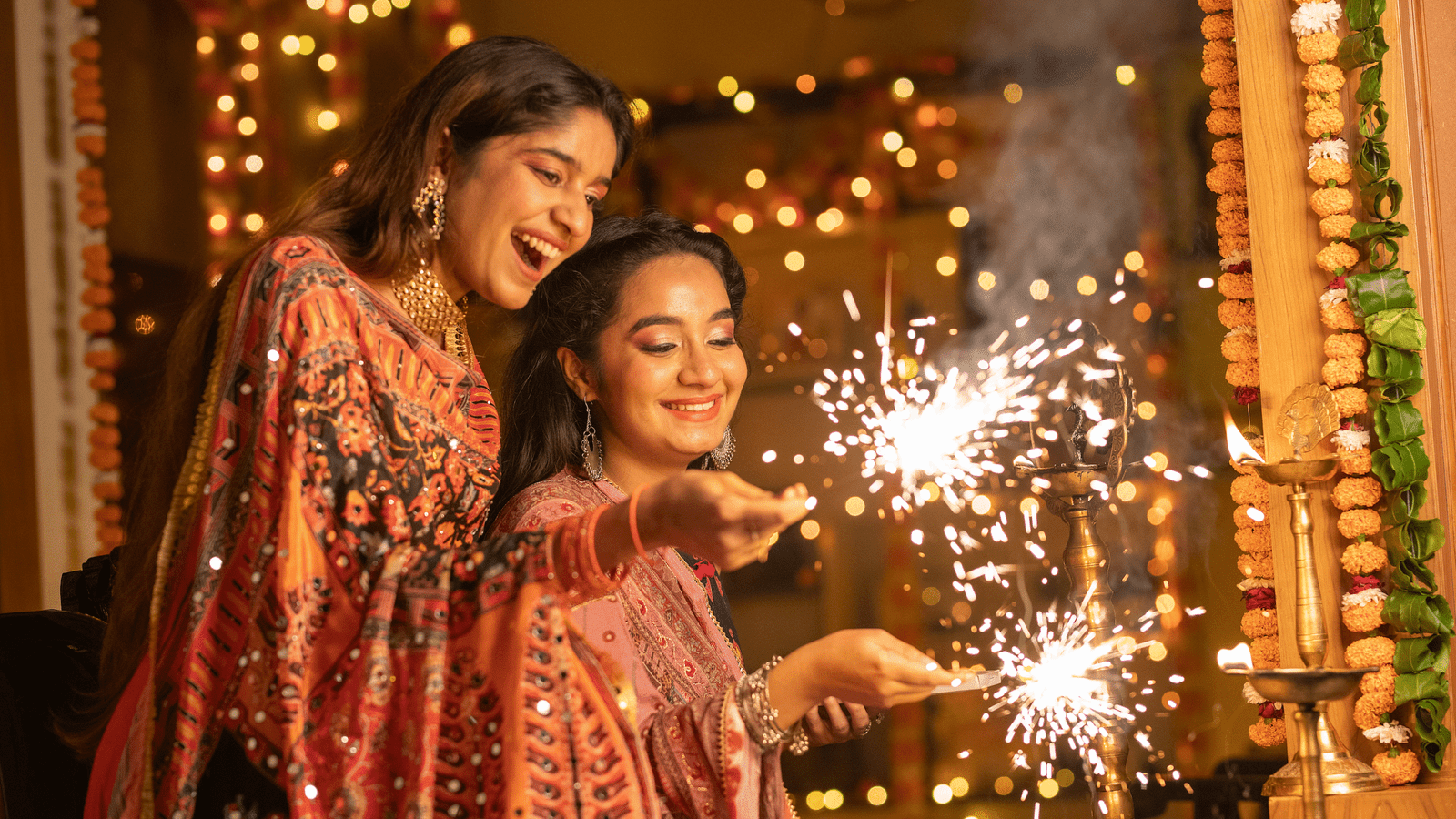
Diwali makes millions of people around the world light up their homes with beautiful little clay lamps every fall? It’s not just a holiday; it’s a global phenomenon known as Diwali, or Deepavali, the ultimate Festival of Lights.
More than just a spectacular display of fireworks and sweet treats, Diwali is a five-day celebration steeped in ancient history and powerful legends. At its heart, it symoolizes the fundamental spiritual truth: the victory of light over darkness, good over evil, and genuine wisdom over ignorance. Let’s delve into the incredible stories that explain why this festival remains so vital today.
The Core Myth: Lord Rama’s Victorious Homecoming
Jay Shri Ram…
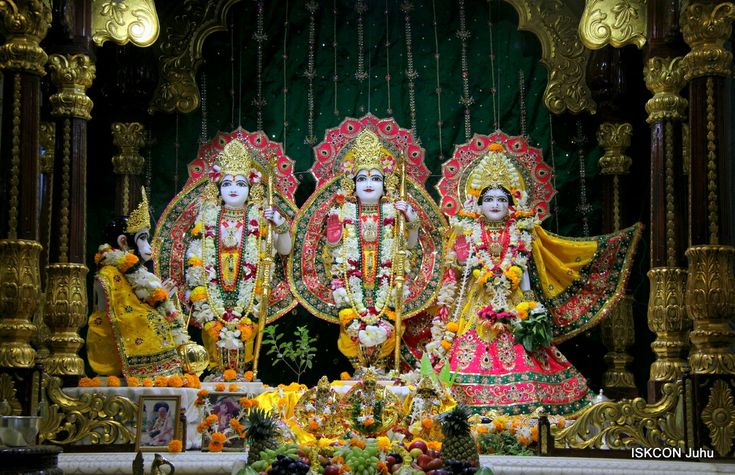
“The lamps are shining bright, for Lord Ram has returned home — the true essence of Diwali.”
If you ask someone in North India why they celebrate Diwali, the first story they’ll likely tell you comes from the epic poem, the Ramayana. This is the ultimate tale of righteousness prevailing.
A Hero’s Return Ignites a Tradition
The celebration specifically marks the glorious return of Lord Rama, his wife Sita, and his devoted brother Lakshmana to their kingdom of Ayodhya. This joyous homecoming happened after Rama successfully defeated the demon-king Ravana and completed a grueling fourteen-year exile.
Imagine the scene: it was a dark, new moon night, and the people of Ayodhya were absolutely thrilled to welcome their beloved prince back. To light his path and celebrate the triumph of Dharma (moral order) over Adharma, they lined the streets, rooftops, and riverbanks with countless flickering earthen lamps, or Dias. This act of collective illumination is the very tradition we continue today, serving as a reminder that after any period of darkness or struggle, a magnificent light awaits.
The Goddess of Wealth and Wisdom
While Rama’s return is central to the narrative, Diwali also holds deep significance for other major deities, turning it into a truly universal spiritual celebration.
Welcoming Goddess Lakshmi
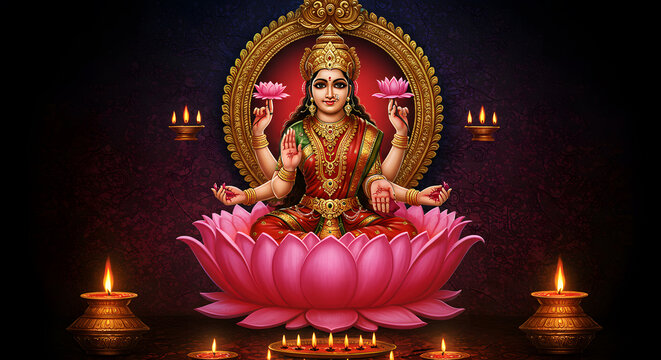
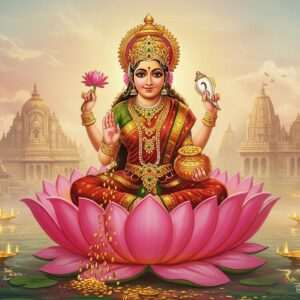
🪔 “May Goddess Lakshmi bless your home with wealth, happiness, and endless light this Diwali.”
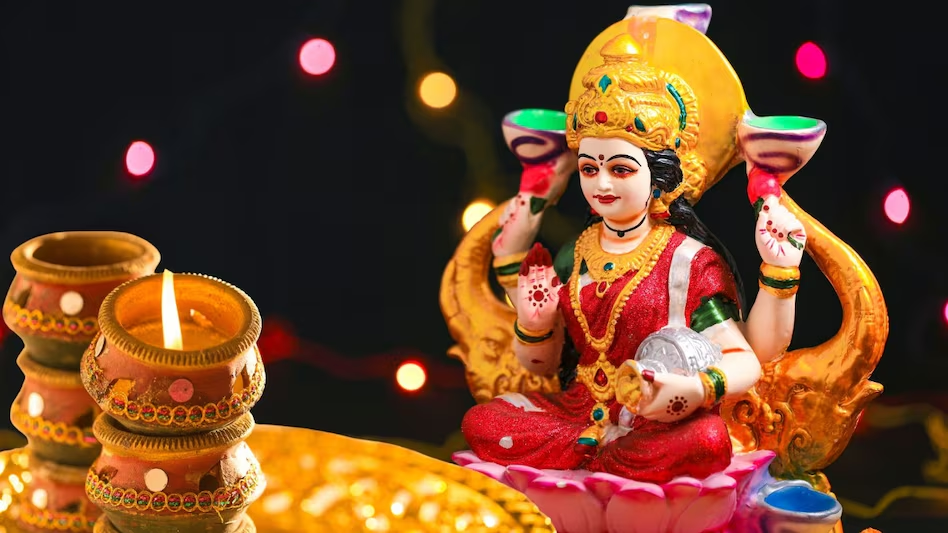
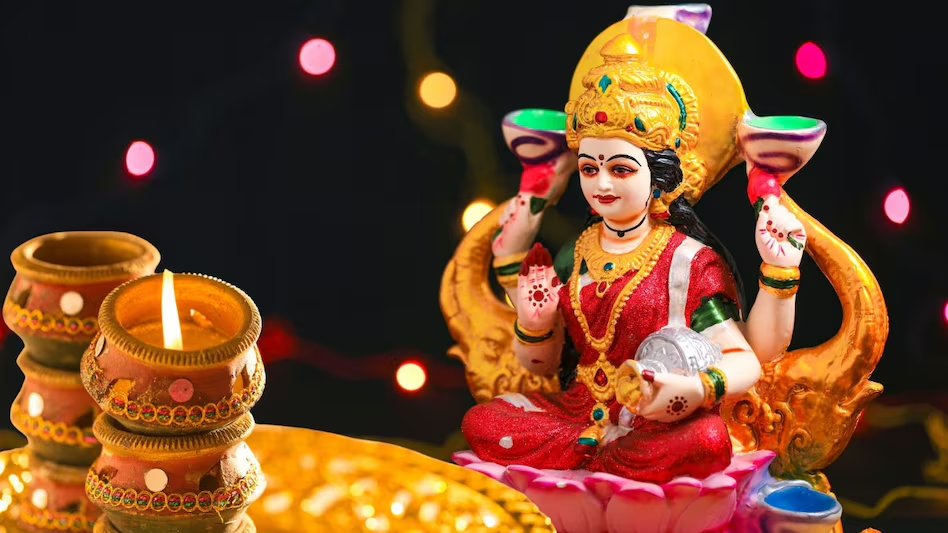
In many communities, the third and main day of Diwali is dedicated to worshipping Goddess Lakshmi, the deity of prosperity, wealth, and abundance. There are a couple of beautiful myths surrounding her on this day:
- The Cosmic Churn: One story holds that Lakshmi emerged from the great Samudra Man-than, the churning of the cosmic ocean, on the day we now call Dhanteras, the first day of the festival.
- A Divine Union: Another tradition states that on the main night of Diwali, Lakshmi chose Lord Vishnu (Rama’s own avatar) as her eternal consort.
This focus on Lakshmi is why homes are meticulously cleaned, beautifully decorated with rangoli patterns, and illuminated—we’re literally inviting her to bless the household with good fortune for the coming year. It’s a wonderful custom that blends spiritual reverence with the very practical human desire for a happy, prosperous life.
Honoring Lord Ganesha
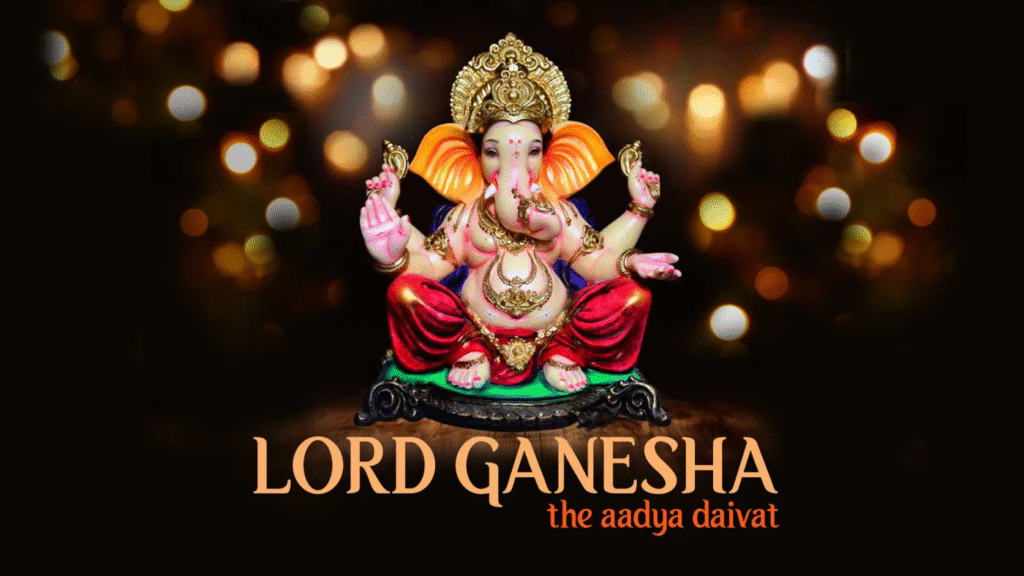
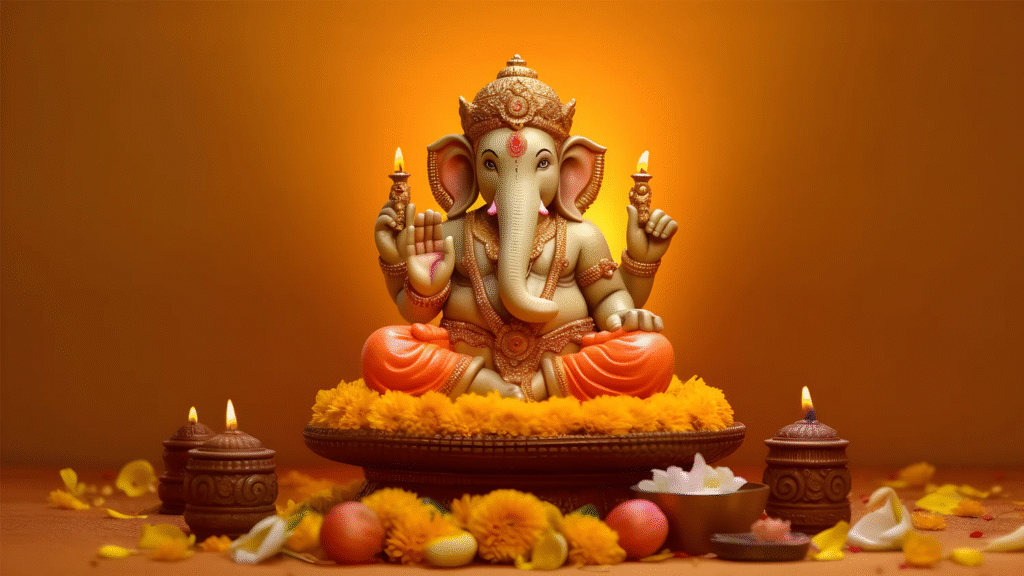
It’s rare to worship Lakshmi without her wise companion, Lord Ganesha, the remover of obstacles and the god of intellect. By worshipping Ganesha first, we seek his wisdom to ensure that any wealth or prosperity Lakshmi brings is used intelligently and ethically. It’s a powerful pairing: Wisdom (Ganesha) guiding Prosperity (Lakshmi).
Regional Stories That Light Up the Festival
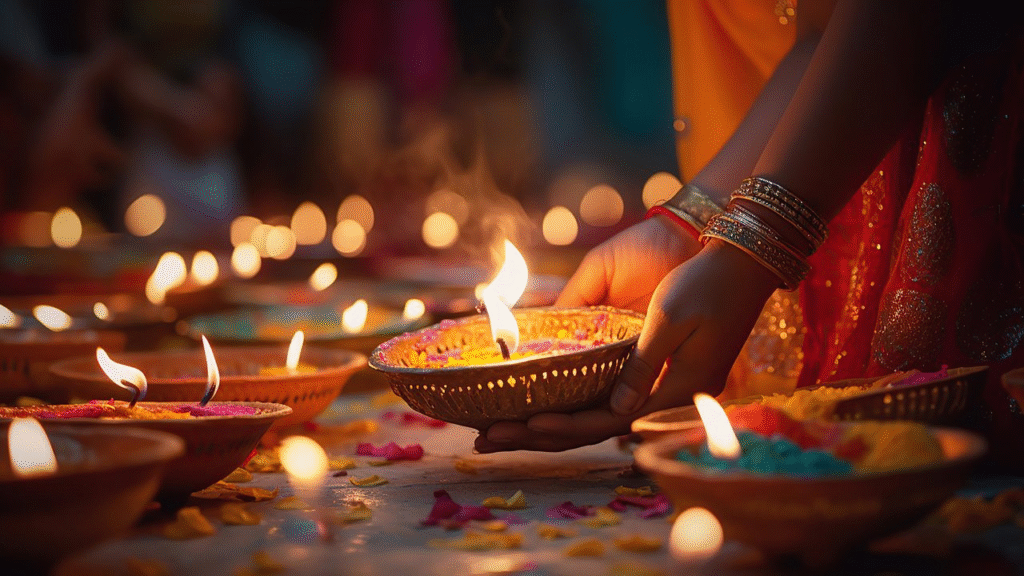
Diwali isn’t a single event; it’s a tapestry woven from diverse regional customs and religious histories. The core theme is always the same—good winning out—but the characters change.
1. Eastern India: Fierce form of Goddess Kali (West Bengal, Assam, Odisha)
Like North India, in Eastern India, Goddess Kali (Kali Puja / Shyama Puja) is mainly worshipped on the night of Diwali, instead of Goddess Lakshmi.
| Area | Story/Significance | traditions |
| West Bengal | This festival symbolizes the victory of Kali, the goddess of power, over evil and destruction . Legend has it that after killing the demons, Kali became extremely enraged and her anger would not subside. Lord Shiva then lay down in her path, and upon stepping on him, the goddess’s anger subsided. | Goddess Kali is worshipped in pandals (Nisha Puja) by staying awake all night. Homes and pandals are illuminated with lamps. Special offerings and rituals are performed during Kali Puja. |
| Odisha | Here Diwali is also celebrated as a festival to invoke ancestors . | This is called Bada Badua Daka. People burn bundles of jute sticks (Kaunriya Kathis) and chant mantras, invoking their ancestors to come out of darkness and return to heaven. This is a unique tradition of guiding the departed souls. |
2. South India: Slaughter of Narakasura (Tamil Nadu, Karnataka, Andhra Pradesh)
In South India, the main focus of Diwali is not on Dhanteras or Lakshmi Puja , but on Naraka Chaturdashi , which falls a day earlier . Here, Diwali is called “Deepawali.”
| Area | Story/Significance | traditions |
| entire South India | This festival commemorates Lord Krishna’s slaying of the cruel demon Narakasura , who had captured 16,000 women, and his slaying freed the people from oppression. | It is mandatory to wake up in Brahma Muhurta (before sunrise) and take an oil bath (Abhyanga Snanam). This is believed to symbolize the washing away of blood stains from Krishna’s body and purification. |
| Tamil Nadu | After bathing, people consume a medicinal tonic called ‘Deepavali Lehiyam’ , which helps in digesting the heavy food eaten during the festival. | Wearing new clothes, making Kolam (similar to Rangoli in the North) and visiting temples are the main rituals. |
| Goa | The Diwali celebrations in Goa are centered on Narakasura. | On the morning of Naraka Chaturdashi, people make huge effigies of Narakasura and burn them, symbolizing the victory of good over evil. |
3. Western India: Trade and the beginning of the new year (Gujarat, Maharashtra)
In Western India, Diwali is closely associated with the business community and the beginning of the new financial year.
| Area | Story/Significance | traditions |
| Gujarat | Diwali marks the beginning of the New Year (Bestu Varas) according to the Gujarati Vikram Samvat calendar . | Chopda Pujan is important for starting a business on Dhanteras , where new account books are worshipped. Footprints are made in front of the house to welcome Goddess Lakshmi. |
| Maharashtra | Vasu Baras is celebrated a day before Diwali . | On this day, cows and their calves are worshipped, symbolizing gratitude for the bounty of children and wealth. It is traditional to eat “faral” (traditional sweet and savory snacks) on Diwali morning. |
4. North-Western India: Another Liberation Story (Punjab, Himachal Pradesh)
In North India, the main story is about Lord Rama’s return to Ayodhya , but in Punjab, a historical chapter is added to it.
| Area | Story/Significance | traditions |
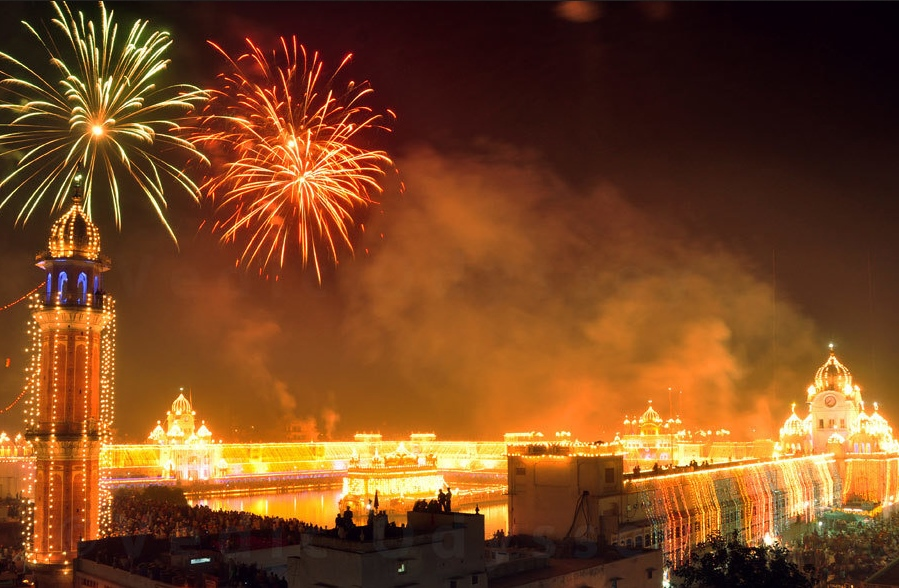
| Punjab (Sikh community) | It is celebrated as Bandi Chhor Divas . It commemorates the release from Mughal captivity of the sixth Sikh Guru, Guru Hargobind Sahib Ji, who had also freed 52 other Hindu kings. | The Golden Temple in Amritsar is illuminated with millions of lamps. Gurudwaras host hymns and kirtans, and fireworks are displayed. |
| Uttar Pradesh (Varanasi) | Here, Dev Deepawali is celebrated 15 days after Diwali , which is called ‘Diwali of Gods’. | It is believed that on this day all the gods descend to earth to bathe in the Ganges. All the ghats of Varanasi are illuminated with millions of lamps, creating an unforgettable sight. |
The Defeat of Narakasura (South India)
In Southern India, the day before the main Diwali celebration, known as Naraka Chaturdashi, is a key part of the festival. It commemorates Lord Krishna’s victory over the evil demon Narakasura, who had imprisoned thousands of women and terrorized the land. This decisive victory, symbolizing the death of darkness, is a huge cause for celebration.
Bandi Chhor Divas (Sikh Tradition)
For Sikhs, Diwali is celebrated as Bandi Chhor Divas, the ‘Day of Liberation.’ This is a historical rather than mythological event. It marks the day in 1619 when the Sixth Sikh Guru, Guru Hargobind Ji, was released from a Mughal prison. Crucially, he refused to leave unless 52 Hindu princes who were also unjustly imprisoned were released with him. This act of selfless courage and insistence on collective freedom cemented the day’s significance as a triumph of justice.
Mahavira’s Nirvana (Jainism)
The Jain community also observes Diwali, but for a different profound reason: it marks the day that Lord Mahavira, the 24th Tirthankara, attained Nirvana (spiritual liberation) in 527 BCE. For Jains, the lighting of the lamps symbolizes the light of Mahavira’s knowledge illuminating the world.
The Five Days of Diwali)
The Diwali festival begins on the thirteenth day of the dark fortnight of the Kartik month and continues until the second day of the bright fortnight of the bright fortnight. Each day has its own unique significance.
1. Day 1: Dhanteras (Dhantrayodashi)
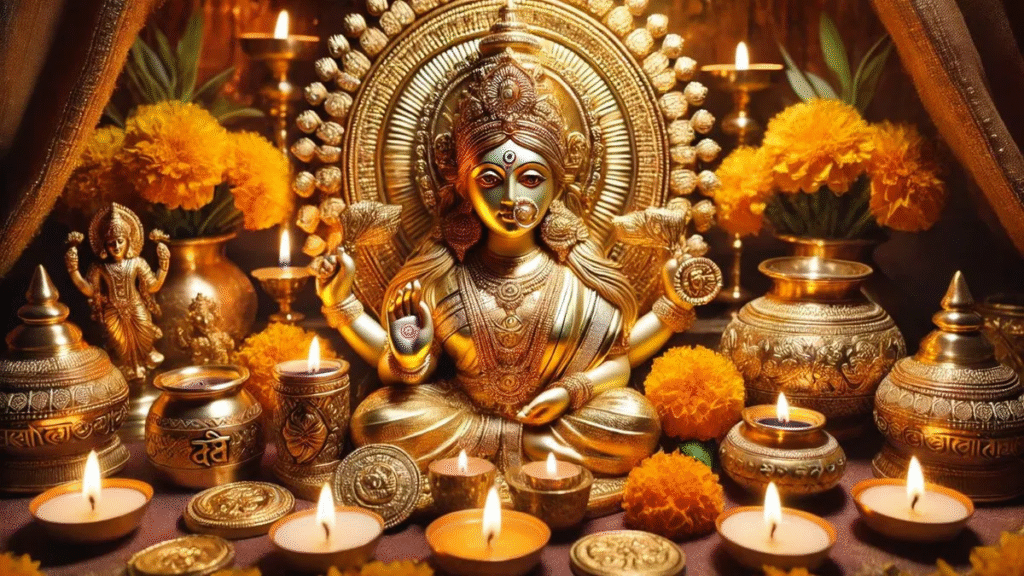
“Diwali is not just lights, it’s the arrival of Mata Lakshmi bringing fortune and happiness.”
Date: Trayodashi of Krishna Paksha, Kartik month
- Significance and Story: “Dhan” means wealth and “Teras” means thirteenth day . On this day, during the churning of the ocean, Lord Dhanvantari , considered the god of Ayurveda and health, appeared.
- What do we do? On this day, Dhanvantari, the god of health, and Kubera , the god of wealth , are worshipped. People buy new utensils made of brass, copper, or silver, as well as gold and silver. It is believed that purchasing new metals brings prosperity to the home throughout the year.
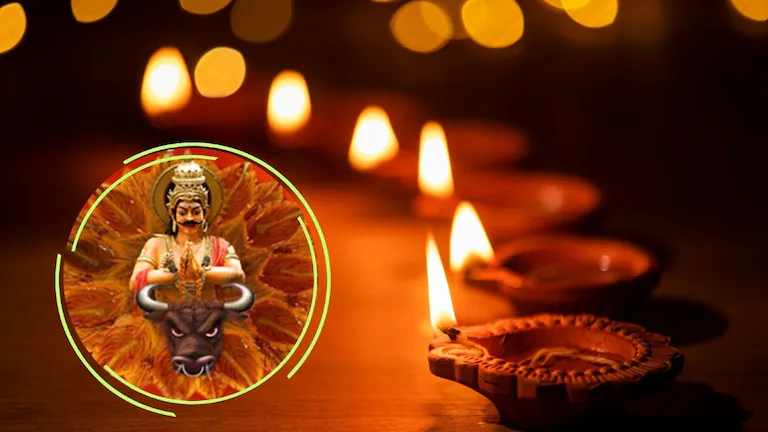
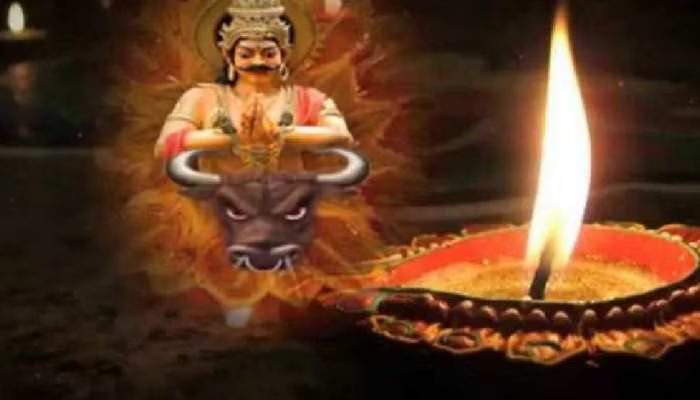
- A special feature: In the evening, a lamp is lit at the main entrance and in the courtyard for the god Yama , called “Yama Deepam.” This is lit to protect family members from untimely death.
2. Day 2: Choti Diwali (Narak Chaturdashi / Roop Chaudas)
Date: Chaturdashi of Krishna Paksha (dark fortnight) of Kartik month
- Significance and Legend: This day is called “Narak Chaturdashi” because, according to legend, it was on this day that Lord Krishna slew the tyrannical demon Narakasura and freed 16,000 captive women. This day re-establishes the victory of good over evil.
- What do we do? It’s also called “Roop Chaudas.” On this day, it’s traditional to wake up before sunrise and take an oil bath (abhyanga snan) followed by a massage. It’s believed that doing so enhances beauty and grace and relieves the fear of hell. In the evening, small lamps are lit in corners and at doorsteps, signaling preparations for the grand festival.
3. Day 3: Diwali (Mahalakshmi Puja)
Date: New Moon Day of Krishna Paksha (Kartik month ) (This is the main day of Diwali)
- Significance and legend: This day connects three main stories:
- Lord Rama ‘s return to Ayodhya after 14 years of exile (to celebrate which the entire Ayodhya was decorated with lamps).
- Goddess Lakshmi appears during the churning of the ocean and chooses Lord Vishnu as her husband.
- Worshiping Goddess Lakshmi and Lord Ganesha brings blessings of wealth, wisdom and knowledge .
- What do we do? On this day, homes are lavishly decorated with lamps, candles, and rangoli. In the evening, during the auspicious time, worship is offered to Goddess Lakshmi, Lord Ganesha, and Lord Kubera. Afterward, people exchange sweets and gifts, and in many places, fireworks are also set off.
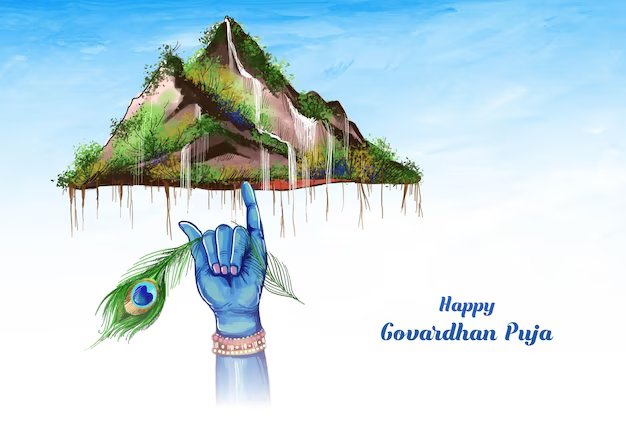
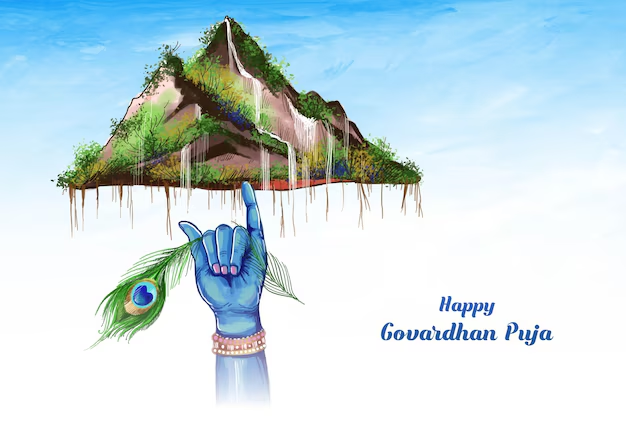
4. Fourth Day: Govardhan Puja (Annakoot/Sacrificial Festival)
Date: Kartik month, Shukla Paksha Pratipada (the day immediately following Diwali)
- Significance and Legend: This day is dedicated to Lord Krishna . The story goes that he lifted Mount Govardhan on his little finger to save the people of Gokul from the wrath of Lord Indra (heavy rain).
- What do we do? On this day, a miniature replica of Govardhan mountain is made from cow dung and worshipped in homes and temples. It is also known as Annakoot, where 56 dishes (Chhappan Bhog) are prepared and offered to the deity. This day also symbolizes gratitude to nature.
5. Fifth Day: Bhai Dooj (Yama Dwitiya)
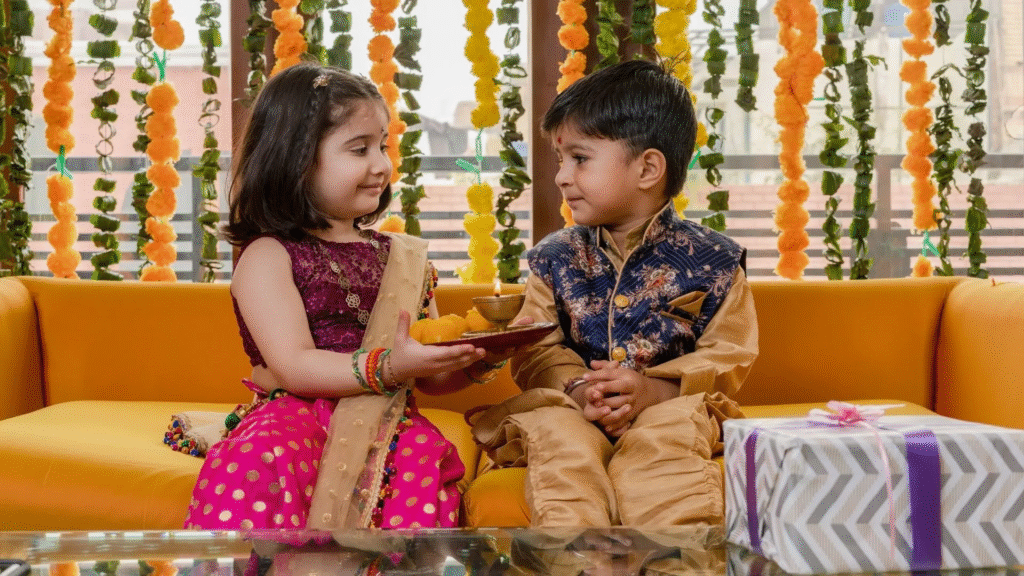
“A bond blessed by love, laughter, and care — that’s the essence of Bhai Dooj.”
Date: Kartik month, second day of Shukla Paksha
- Significance and Story: This festival is dedicated to the sacred bond and love between a brother and a sister. Legend has it that Yamaraj , the god of death, visited his sister Yamuna , who applied a tilak to his forehead, fed him, and prayed for his long life. Pleased, Yamaraj granted a boon that any brother who meets his sister on this day will not fear untimely death.
- What do we do? Sisters apply tilak to their brothers, feed them with their own hands, and wish them long life, success, and prosperity. Brothers give them gifts in return. This day is a beautiful way to strengthen family affection and bonds.
These five days together make the festival of Diwali a complete cycle of health, wealth, knowledge, victory and strengthening of relationships .
More Than a Holiday: A Five-Day Celebration of Life
Diwali’s longevity lies in its incredible blend of spiritual significance and social bonding. It’s a festival designed to renew not just your spirit, but your relationships, too.
The entire festival is traditionally celebrated over five distinct days, concluding with Bhai Dooj, a beautiful occasion dedicated to honoring the unique relationship between brothers and sisters. It’s a moment for sibling love, prayers for one another’s well-being, and exchanging gifts, often compared to the spring festival of Raksha Bandhan.
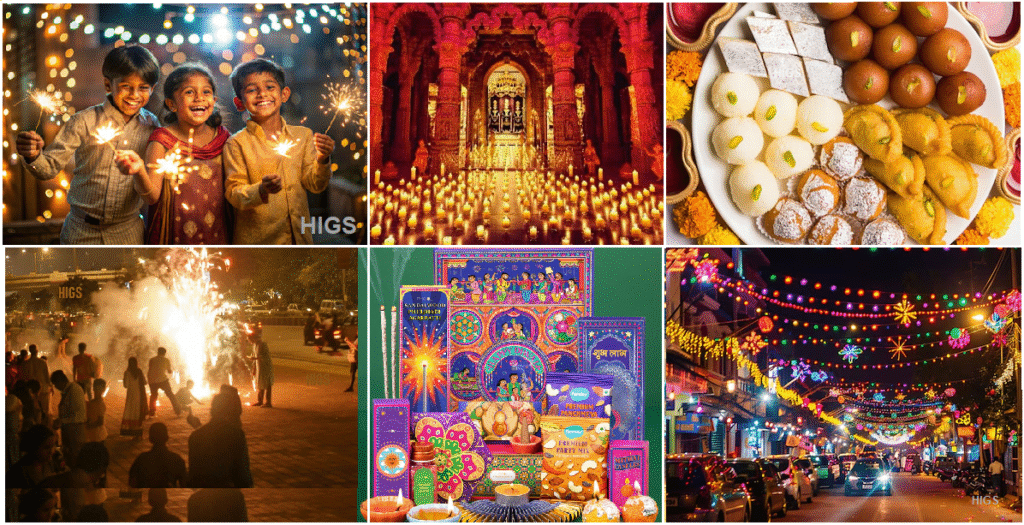
Ultimately, whether you’re reflecting on Rama’s epic return, seeking Lakshmi’s blessings for a new financial year, or honoring a guru’s courageous act of justice, Diwali calls us to look inward. It prompts us to clean our mental clutter, light the lamp of hope in our hearts, and share that radiance with everyone around us. That’s why, even thousands of years later, the glow of a simple diya still holds so much power.
#Diwali2025 #FestivalOfLights #RamLalla #AyodhyaReturn #DiwaliCelebration #VictoryOfGoodOverEvilMataLakshmi #LakshmiBlessings #DiwaliVibes #WealthAndHappiness #DivineBlessings #LakshmiPujaBhaiDooj #SiblingLove #BhaiBehenBond #FamilyFestival #CelebrateTogetherness #BhaiDooj2025 #SiblingGoals #LoveAndProtection #FestivalOfLove #DiwaliSpecial
Leave a Reply